Saturday, June 28, 2014

PATAL BHUWANESHWAR CAVE


Patal Bhuwaneshwar
Is a limestone cave temple 14 km from Gangolihat in the Pithoragarh district of Uttarakhand state in India. It is located near the  village Guptari.. Legend and folklore have it that this underground cave enshrines Lord Shiva and thirty three crore Gods. The cave is 160 m long and 90 feet deep from the point of entrance. Limestone rock formations have created various spectacular stalactite and stalagmite figures of various hues and forms. This cave has a narrow tunnel-like opening which leads to a number of caves. 

Upto 1987, people went inside burning 'chilukas' ( Pine wood pieces finely cut) since there was total darkness inside.As a result,the walls are all covered & smeared with black soot.After arrival of 7 Garhwal Rifles & help provided by the Garuda Division,the first generator was installed in end of 1987.Now it is electrically illuminated.
Built by underground the flow of water, Patal Bhuvaneshwar is not just one cave, rather a series of caves within caves.
"He who wants to feel the presence of eternal power should come to the sacred Bhuvneshwar situated near the confluence of Ramganga, Sarayu and Gupt-Ganga."

-Manaskhanda, Skandapuran.

The Legend has It.

The first human to discover this cave was Raja Ritupurna - a king in Surya Dynasty ruling Ayodhya during the Treta Yuga. The story starts with Ritupurna and King Nala. It is said that once, King Nala was defeated by his wife, Queen Damayanti. In order to escape his wife’s wrath & confinement, Nala requested Ritupurna to hide him. Ritupurna took him to the forests of the Himalayas and asked him to stay there. While going back home he was fascinated by a deer which ran into the woods.The King went after it. He could not find it and took rest under a tree. He had a dream where the deer was asking Ritupurna not to chase him. As he woke up ,he still saw the deer around & started following him. 
He reached a cave where a guard was standing. After inquiring about the cave he was allowed to go inside. Right at the entrance, Ritupurna met Sheshnag  ,who agreed to take him inside.
What a great & heavenly sight it was  ! He saw all the 33-crore gods and goddesses including Lord Shiva Himself. It is said that after his visit, the cave was closed for posterity with a prediction in the Skandpurana that it shall reopen only  in Kaliyuga. 
Shankarcharya (in Kalyug), during his short visit to Himalayas re-discovered this cave in 1191 AD. Since then regular worship and offerings are being made at this place.That was the beginning of the modern pilgrimage history.
According to belief King Rituparna of the Sun dynasty (Surya Vansha) discovered the cave in ‘Treta yug’. It has been described in the ‘MANAS KHAND’ of ‘SKAND PURAN’. 
The cave, it is believed, is connected by an underground route to Mount Kailash. 
It is also said   that Pandavas, left for  their last journey to the Himalayas after meditating here.The cave is dedicated to Lord Shiva. Almost every god that you would have heard of ,resides in this mystic cave. It is also believed that your  worship at Patal Bhuvaneshwar is equivalent to worshipping  Char Dhams of Uttarakhand.
The priest family are the 'thakur' Bhandaris  who have been  performing religious rites at Patal Bhuvaneshwar ever since the time of the Adi Shankaracharya-more than 20 generations in the line. They are a treasure house of legends, folk lore, anecdotes and information about this holy place. It is also believed that this cave is internally connected to the four abodes /seats (Char Dham).This wonder is believed to be as old as the earth itself. It has been mentioned in detail in the 103th chapter of Manaskhand of "Skanda Purana". 
The first human who entered this cave was king "Rituparna" of Suraya Dynasty during the "Tretayuga". During his visit, he had encountered several demons.
"Sheshnaag" himself acted as his guide.
One can see the gateway reflecting great ages in Patal Bhuvaneshwar. 
There are four entrances inside the cave known as ‘Randwar’ ‘Paapdwar’, ‘Dharamdwar’ and ‘Mokshadwar’. The Paapdwar was closed soon after the death of Ravana and the Randwar - literally, the road to war, was closed down after the great Mahabharata war. At present only two gateways are open.
 You can see the tongue of Kali Bhairav, Indra, Jatas of Lord Shiva and several other forms of gods inside the caves . 
The motorable road ends half a kilometer short of  the cave entrance. 
You have to descend nearly 100 steps into this narrow cave, to reach the Sanctum - Sanctorum, which gives an overwhelming & great feeling that you’re entering the centre of the earth.


Friday, June 27, 2014

GLACIERS & BIRTHI FALL OF PITHORAGARH,UTTARAKHAND


TREKKERS' PARADISE - PITHORAGARH DISTRICT


Milam : Milam, one of the most beautiful glaciers of the world is in district Pithoragarh located at the height of 4250 meters above sea level. This glacier has been named after a village Milam located at 3 k.m. away from the Milam Glacier. In ancient time, Milam village was the most populous village of district Pithoragarh but at present its population is almost zero. But its importance is still maintained due to the world's famous glacier - Milam.River Gori Ganga,a tributary of the river Kali starts from the Milam Glacier.


Glaciers of Pithoragarh

River BasinGlaciersCatchment Area
Sq. Km
Glacier Area Sq. Km
GoriMilam
Kalabaland
Northern Lwanl
Bamlas
Lower Lwanl
Balati
Baldimga
Terahar
Poting
Ralamag upper
Talkot
Ralamag lower
Sankalpa
Middle Lwanl
Lower Poting
212.21
60.00
49.00
46.00
45.00
40.00
31.00
31.00
30.00
26.00
24.00
22.00
19.00
15.00
6.50
39.50
12.00
10.00
9.00
8.00
10.00
8.00
4.50
8.50
8.50
5.00
8.00
3.20
2.00
2.00
LassarUpper Lassar
Lower Lassar
Middle Lassar
131.60
126.00
115.51
32.1
34.9
21.6
DhauliLower Dhauli
Sona Glacier
Baling Golfu
Upper Dhauli
Sobla Tejam
Middle Dhauli
130.00
72.00
45.00
32.00
22.00
19.00
24.5
4.00
3.00
8.2
4.00
3.1
KaliLower Kali
Upper Kali
30.00
10.00
5.2
5.0
KutiGlaciers of Kuti
Yangti Basin
208.0020.00

Birthi Fall : The famous Birthi Fall is on the Thal - Munsyari route near Bala village.


GO FOLKS GO - GO TO THESE PLACES !


Thursday, June 26, 2014

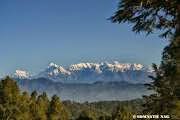
SOME OF THE MAJOR HIMALAYAN PEAKS SEEN FROM RANIKHET


Ranikhet situated at 6132 feet, is easily one of the finest hill stations of the world.Located in  Almora district of Uttarakhand, India, it has ,perhaps, the longest East-West stretch of the hoary headed ,lofty & mighty Himalayas. A cantonment township of immense pristine beauty , it is indeed beyond compare.It has an embracing & salubrious climate.Walking under the oaks,deodars ,rhodos & kafal trees has it's own charm.

To sum it up, it is beyond this world


CAUTION : IT IS A QUIET PLACE UNLIKE NAINITAL!!.


THE HOARY HEADED & KALIDASA'S FAVOURITE


(CENTRAL FRONT VIEW 210 MILES LONG STRETCH: 80 MILES CROW FLIGHT DISTANCE)


Tuesday, June 24, 2014

COMBINED MILITARY HOSPITAL RANIKHET


Sgt. Aloysius 'Al' M. O'Neill Jr,3 Combat Cargo Group,10 Combat Cargo Squadron,U.S.A. Air Force, talks of his days in Combined Military Hospital,Ranikhet


Although the only times I am ever certain of the date of V-J Day are when the date is printed in the paper, I do know where I was, because I wasn't getting around much at the time.  I was in the "Combined Military Hospital", Ranikhet, in the northernmost part of India, between Nepal and Afghanistan.  This was a British Hospital, and happened to be about 1500 miles from my base.

Ranikhet is in the foothills of the Himalayas, at an altitude of about 6000 feet, not far from Tibet. My unit, the Tenth Combat Cargo Squadron, Tenth Air Force, was based at Myitkyina, in the northern part of Burma, near the border with Yunnan Province, China.  Our job had recently been to deliver supplies to the forward areas in Burma and to drop them to those working behind the Japanese lines.  However, around June 1,1945, our mission was changed to flying supplies - mostly gasoline, from Myitkyina to the vicinity of Kunming, China, in preparation for a big offensive in China. (The offensive was made unnecessary by the atomic bomb.)   These flights were over part of "The Hump" (famous then, forgotten now).   I flew as a Radio Operator.

The reason I was in Ranikhet was that on July 15, the C-46 in which I was flying lost both engines and we took to our parachutes.  It was four days getting back to something resembling civilization (with the help of our real friends, the Kachins), and was offered the chance to go to Rest Camp (Ranikhet). 

The reason I was in the hospital was that on my first night at Ranikhet, I developed chills and fever.  The eventual diagnosis was typhoid fever, almost certainly the result of water I drank while walking back from the jump.  As near as I can figure it, I was at Ranikhet from about the third week in July until the end of September or the beginning of October.  For the last part of that time I was considered well enough to leave the hospital, and go into town, etc.  

Strangely enough, outpatients, including me, were issued civilian-looking clothes, consisting of gray slacks, white sport shirts, and navy blue blazers.  It was nice to be so dressed when I, along with some of my fellow outpatients, were invited to tea and a round of croquet at the local Anglican Vicar’s residence.  The war was improving a lot!

That made my hospital stay memorable was the cast of characters. Either on the staff or as patients in any ward, there were people from all over England; several Londoners of various social levels, including"’ an "almost" Cockney, "not born within the sound of Bow Bells, but moved there when I was three months old". (Incidentally, Adolph Hitler was engaged in a personal vendetta against this man, a pub keeper; during the first days of the "blitz" a bomb landed near his house, and one of the first "V-bombs" landed near his pub.)  I was brash enough in those days to get into an argument with some of the Londoners about the location of "Big Ben" although I had never been to London.  Not surprisingly, I was wrong!  Also among the orderlies there was a Welshman, naturally called "Taffy" by the other Britons.

Among the patients were East Africans; they were white, of course; in those days the British Empire was even more racist than the U.S.  One of my fellow patients was recovering from flamethrower burns received while demonstrating one of those terrible devices before high-ranking officers. Fortunately he was not seriously injured, and was recovering nicely.

There was a Norwegian pilot, flying for the RAF, who had become a patient by landing a Spitfire upside down on some Maharaja’s estate, and was wearing a body cast as a result. As the only "Fly Boys" in the place, we became good friends.

A Royal Marine was a patient. How he happened to be stationed on the plains of India, I don’t remember; I do remember that he had some sort of infection, and was the first person I knew to be treated with the new wonder drug, penicillin.  For three days he lay with his leg strapped to a board while the drug was dripped through a needle into his big toe. His big ambition at that time was to curl up into a "little ball" and go to sleep.

There were Indian soldiers working in the hospital and one of the doctors was an Indian; another was Canadian. The nurses (called Sisters) were English.

One fellow patient had been a British merchant seaman, had been torpedoed, and had refused to sail again.  Promptly drafted, he eventually found himself in Burma in a desperate battle, his unit surrounded by Japanese for days, and ultimately had had a breakdown. No one told me of his condition; early the morning after he moved in to the ward with me he woke me by calling over to me that there was a "snake " under my bed. 

Since I had just arrived from an area in which cobras and kraits were not uncommon, I took him at his word and yelled for an orderly.  After a thorough search revealed nothing, his condition was made known to me; from then on, his descriptions of little men sitting on the foot of my bed, etc. did not bother me.

When I first became a patient I noticed several orderlies in British uniforms whose accents seemed out of place.  It developed that they had the saddest stories of all. These were former members of Mussolini’s army in North Africa. They had been captured by the British at Bardis in January, 1941, over four and a half years before.  Italy had surrendered and deposed Mussolini in mid 1943.  The country was seized immediately by German troops already in place.

Some time after that, the British Army, in India at least, offered some of their Italian prisoners from the African campaign (after screening) the opportunity for limited freedom in return for work. These men could get passes to Ranikhet, etc. and as I recall, were paid according to their military grades. Their big problem was that that they had had no word from home in years, during which time the war had traveled almost completely up the Italian peninsula, destroying everything in its path. They did not know if family members were alive or not.

It was interesting, when I became an outpatient, to go to Mass at the very small Catholic Church in Ranikhet.   The priest was an elderly Italian missionary (the British apparently had left him free, even though they had been at war with Italy a short time before) one of the altar boys was an Indian, the other an Italian ex-prisoner of war, and all (including the multi-national congregation) celebrating the Mass in the language (Latin) in which they had done so at home.

Incidentally, I got into a friendly argument with one of the Italians about the pronunciation of classical Latin with one of the Italians. He spoke of the orator "Chichero" and I told him the proper pronunciation was "Kikero".   He called the Roman general, later Emperor, "Julius Chesar"; I pointed out that the correct pronunciation was "Julius Kaisar".  Years later my high school Latin teacher got a good laugh out of this story.  He told me we were both right; that I was using first century pronunciation and that Sergeant Bucci was talking about the third century.

The Italians taught me a card game called "Seven-and-a- Half", which closely resembled Black jack. I did not have beginner’s luck.  I was able to retain only enough to buy rations for the two-day train trip back to Calcutta from whence I could catch a plane to Myitkyina.

Rounding out the cast of characters at the hospital was a troupe of Phesus monkeys who made a circuit through the area, and who announced their arrival by landing on the tin roof and bounding across, to the frustrated barking of dogs belonging to the staff.

Life in the hospital was extra comfortable for me. Every couple of days, the American Red Cross sent to the hospital from the rest camp two dozen cup-cakes, two dozen candy bars, and a carton of cigarettes.  These were to be distributed to the Americans at the camp, which, most of the time, was me! I didn't smoke, and even I couldn't handle that quantity of sweets; my generosity with my spoils did not hurt my popularity at all.

     Once or twice there would be another American patient. All that I recall were the result of horse-back injuries.  One of the recreations available to those at the rest camp was to rent a retired cavalry horse from its Indian owner for one rupee (.30) per hour. Most of the vacationing, riders were not very skilled; the results were inevitable.  One day while I was still bed-ridden, the Welsh orderly came into the ward and announced, "The Americans just dropped an Atom Bomb on Hiroshima", I wondered why we had done that, when we had completed the conquest of the island some months before. A short time later, Trumans’s voice on the radio cleared up that point.


One of the great attractions of Ranikhet was that from there could be seen, Nanda Devi, one of the worlds highest mountains. During most of my stay in the hospital the visibility was poor but before I left for one great day, the air cleared, and there was the mountain. Although seventy-five miles away, it seemed very close. What came through the thin mist was only the sun reflected from the snowy outlines of the mountain, those areas not covered by snow were not visible. The appearance was of an enormous crystal mountain.

     I stayed in the hospital for the announcement of the Japanese surrender, for the official signing of the surrender documents on the deck of the U.S.S. Missouri, and during the election which unseated Winston Churchill as Prime Minister of Great Britain (at which point I indicated to my British friends that their country was out of its collective mind).

When the announcement was made that Lend-Lease was ending, I, as a representative of the United States Government, took some heat, but I assured everyone that this was just a technicality; that by law Lend-Lease was only to last for the duration of the war, and that something would take it’s place. (I’ve always felt that someone from Britain or Italy or Norway eventually reported my promise to Secretary of State George Marshall, forcing him to create the "Marshall Plan".)

The whole time I was overseas, Muriel and I tried to write each other every day. Because she did not know I was in the hospital until Doctor Casey, from the American rest camp, wrote to her, the flow was interrupted, until finally, on one great day I received about thirty letters from her, along with a number of letters from my mother and others.

With the war’s end I became apprehensive about being away from my squadron and having it go home without me. As a soldier attached to no unit, I could become the last man left in the China-Burma-India Theater.  It turned out that I need not have worried; instead of going home, after I rejoined the squadron we went to Shanghai to fly Chinese Nationalist soldiers to Peking (now Beijing) to receive the weapons of the defeated Japanese.  We were lucky; we lost only one man during this operation and not to flying, but to meningitis.

While in Shanghai, I got the great news that Al O'Neill III had arrived.  A telegram to that effect had followed me from Myitkyina to Shanghai by way of New Delhi, India (Theater Headquarters) taking ten days for the journey.

In mid-December we sailed for home from Shanghai, leaving our planes still flying, manned by "low-point" crews, and arrived in Seattle on December 29, 1945, to find the "WELCOME VICTORS" sign turned off. What did we care? We were home!


Monday, June 23, 2014

DO NOT BE TENSE : BE YOUR SELF.


Just be yourself  and define yourself on your terms.

 Oscar Wilde once said with his usual wit: Be yourself; everyone else is already taken. As humorous as this might seem, it's a basic summation of the truth. Yet, you can't be yourself if you don't know, understand, and accept yourself first. It should be your primary goal to find this out. Find the time to dwell upon what you value and take time to consider what makes up the essence of who you are. As part of this, contemplate your life and choices. Try to think about what kinds of things you would or wouldn't like to do, and act accordingly; finding out through trial and error helps more than you might think it does. You can even take personality tests, but be careful to only take what you want from them so that you do not let such tests define you. Instead, ensure that the defining you do is based on your own terms and is something you feel absolutely comfortable with. You may feel self-conscious, but over time if you are around the right type of people for you, they will accept you for who you are. And love and start to look at the real you.
  • In finding your values, don't be surprised if some of them seem to conflict. This is a natural result of taking on broad values from a variety of sources, including culture, religion, mentors, inspiring people, educational sources, etc. What does matter is that you continue working through these conflicts to resolve what values feel most true to yourself.
  •   Avoid fixating in the pastand not letting yourself grow. 
  • One of the  most unhealthy approaches to being oneself is to make a decision that who you are is defined by a moment or period of time, after which you spend the rest of your life trying to still be that person from the past rather than someone who is still you but grows with the passing of each season and decade. Allow yourself this space to grow, to improve, to become wiser. And allow yourself to forgive past errors and past behaviors you're not so proud of. Work on accepting mistakes and choices you've made; they're done and in the past. You had your reasons for them and the decision made sense at the time, so instead of harnessing yourself to past mistakes, allow yourself to learn their lessons and continue to grow.
    • Look for people around you who proudly proclaim they are no different than they were the day they turned 16 or 26 or 36, or whatever. Do these people seem flexible, easygoing, happy people? Often they are not because they are so busy insisting that nothing has changed for them ever, that they're incapable of taking on new ideas, learning from others, or growing. They might believe adamantly that they are "being themselves" but in reality they are often enslaved by the past and a particular image of themselves that they would have done better to have released long ago. Growth into every new age and stage of our lives is an essential part of being true to ourselves and to being emotionally healthy 
    • Stop caring about how people perceive you. Some of them will like you and some of them won't. Either attitude is as likely to be right or wrong. It's next-to-impossible to be yourself when you're caught up in constantly wondering "Do they think I'mfunny? Does she think I'm fat? Do they think I'm a SLUT? Am I good/clever/popular enough to be a part of their group of friends?" To be yourself, you've got to let go of these concerns and just let your behavior flow, with only your consideration of others as a filter — not their consideration of you. Besides, if you change yourself for one person or group, another person or group may not like you, and you could go on forever in a vicious cycle trying to please people instead of focusing on building up your talents and strengths; being apeople-pleaser or always wanting everyone's love and respect is a totally pointless exercise in the end that can harm your personal development and confidence. Who cares what other people say? As Eleanor Roosevelt said once, "no one can make you feel inferior without your consent" and what matters most is that you listen to your own inner confidence and if it's missing, that you start developing it!
      • Does this mean no one's opinion in life matters? No. It hurts if you're socially rejected. If you're forced into a situation where you must spend most or all of your time among people who can't stand you for reasons of their own, it's dangerous to internalize their negative ideas of who you are. What you can do is exercise some choice in whose opinions you value more than others. It's much healthier to pay attention to people who genuinely mean you well and who agree with you about what you want to do with your life.
      • Be careful though, an individual can mean you well, but it may be only on their own terms. This could steer you down the wrong path, and with all the passion of true consideration for your well being.
      • Don't trivialize it if you face negative social pressure or bullying. It's easier to withstand it if you are aware of it as pressure and build healthy defenses. Building up a circle of trusted friends and people who share your views and beliefs in life is a good way to help reduce the impact of hostile people. You can tell yourself their opinions don't matter, and they shouldn't, but that's a lot easier when there are others who agree with you and stand by you. If you are alone that is fine, just think about how the people in your life who care about you. Then compare them to whoever the bully is; suddenly you can realize that their opinion of you, your family or your lifestyle, is worthless. We inherently care about the opinions of those we respect and look up to. This works both ways; if someone has no respect for you, then what they say about you is just empty words coming from someone who is one step above being a total stranger.
      • Learn the difference between intimidating, sarcastic, conniving, or thoughtless comments from others and constructive criticism which is well intended. It will focus on real faults that you don't know about, and could do with remedying. In the latter case, people such as parents, mentors, teachers, coaches, etc., might well be telling you things that you need to digest and mull over at your own pace, to make self-improvements for the better. The difference is that their critique of you is intended to be helpful. They care about you and are interested in how you grow as a person, and are respectful. Learn how to spot the difference and you will live well, dismissing pointless negative critiques, and learning from the constructive critique.
      Be honest and open. What have you got to hide? We're all imperfect, growing, learning human beings. If you feel ashamed or insecure about any aspect of yourself — and you feel that you have to hide those parts of you, whether physically or emotionally — then you have to come to terms with that and learn to convert your so-called flaws into individualistic quirks or simply as basic, down-to-earth acknowledgments of your own imperfections. Be honest with yourself, but don't beat yourself up; apply this philosophy to others, as well. There is a difference between being critical and being honest; learn to watch the way you say things to yourself and others when being honest.
      • Try the tactic of owning up to your imperfections mid-argument with someone. You will often discover that suddenly you've removed the very reason for stubbornly holding the line of argument, which is often about preserving face and not giving in. The moment you say, "Yeah, look I get really irritable when the room's in a mess too. And I acknowledge that I shouldn't leave my clothes in a pile on the floor and yet, I do it because that's a lazy part of myself I'm still trying to train out of the habit. I'm sorry. I know I could do better, and I will try." 
      • Relax. Stop worrying about the worst that could happen, especially in social situations. So what if you fall flat on your face? Or get spinach stuck in your teeth? Or accidentally head butt your date when leaning in for a kiss? Learn to laugh at yourself both when it happens and afterward. Turn it into a funny story that you can share with others. It lets them know that you're not perfect and makes you feel more at ease, too. It's also an attractive quality for someone to be able to laugh at themselves and not take themselves too seriously
      • Treat yourself as you'd treat your own best friend. You value your friends and those close to you; well, who is closer to you than you are? Give yourself the same kind, thoughtful, and respectful treatment that you give to other people you care about. If you had to hang out with yourself for a day, what is the most fun/enjoyable/fulfilled/calm/contented type of person you could be, while still being yourself? What is the best version of you? Believe in this idea and use that as your starting point. Love and accept yourself as you are now, just as you do for your close ones.
        • Be responsible for yourself and for boosting your self-esteem. If others aren't telling you you're great, don't let it get to you. Instead, tell yourself you're special, wonderful, and worthwhile. When you believe these things about yourself, others will recognize that glow of self-confidence and begin confirming your self-affirmations in no time
        Develop and express your individuality/not comparing with others.. Whether it's your sense of style, or even your manner of speaking, if your preferred way of doing something strays from the mainstream and produces positive outcomes, then be proud of it. Be a character, not a type. Learn to communicate well - the better you can express yourself, the easier it is for the people who like you as you are to find you and the ones who If you're always striving to be someone you're not already, you'll never be a happy person. This comes about through comparing yourself to others and finding yourself wanting in certain ways. This is a slippery slope to tread, though. You can always see the appearances others wish to portray publicly but you won't ever see what's really going on behind their façades in their apparently perfect world. By comparing yourself to others, you give their image-portrayal way too much power and reduce your own worth based on a mirage. It's a useless activity that only brings harm. Instead, value the person you are, love your personality, and embrace your flaws; we all have them, and as explained earlier, being honest is better than running from them.
        • Avoid being unfair to yourself. Sometimes comparison causes us to compare apples with pears. We'd like to be a top movie producer in Hollywood when we're a lowly, aspiring scriptwriter. To see that top producer's lifestyle and find yourself wanting as a result is an unfair comparison – that person has years of experience and hobnobbing behind them, while you're just starting out, testing the waters with writing skills that may one day prove to be exceptional. Be realistic in your comparisons and only look to other people as inspiration and as sources of motivation, not as a means to belittling yourself.
        • Never stop looking for your own strengths. Over time, these may change and thus, so may your definition of yourself, but never let up in focusing and refocusing on them. They more than adequately balance out your flaws and are the principal reason for not comparing yourself to others.
        • Comparison leads to resentment. A person filled with resentment cannot focus on the mantra of "be yourself" because they are too busy hankering after someone else!
        • Comparison leads also to criticism of others. A life filled with criticizing others stems from low self-esteem and a need to pull others off their perches that you've placed them on. That's both a way to lose friends and respect, and it's also a way of never being yourself because you're envy-struck and spending too much time on admiring others for their characteristics and not on yourself.
        Follow your own style. The common thing a lot of people do is copy others' actions because it seems like the better route to fit in, but really, shouldn't you stand out? Standing out is very hard, yes, but you need to try avoid assuming other people's perspectives of you, even if it's not something you would normally do; that's what being yourself is all about. Maybe you like to sit outside on the deck under an umbrella in the middle of the rain, maybe you have different ideas of things, rather than other people, maybe you like strawberry cake instead of the common chocolate cake, whatever you are,accept it. Being different is absolutely beautiful and it attracts people to you. 
      • Accept that some days you're the pigeon, and that some days you are the statue. People might raise eyebrows and even make fun, but as long as you can shrug and say "Hey, that's just me" and leave it at that, people will ultimately respect you for it, and you'll respect yourself. Yes, sometimes it will hurt when you're teased. Just learn to ignore it. While this can be very difficult, and far easier said than done, try your best to flick it off your shoulder.
  • BE HAPPY & ENJOY EACH MOMENT FOLKS!