Wednesday, January 15, 2014

U.P. THE SLEEPING GIANT :SECURITY IMPLICATIONS FROM ITS NORTHERLY NEIGHBOUR


TIBET IS CHINA’S PALM,

NEPAL,BHUTAN,SIKKIM,LADAKH,THE N.E.F.A. ARE THE FIVE FINGERS.

NOW THAT THE PALM HAS BEEN RESTORED TO CHINA,

THE FIVE FINGERS SHOULD GO WITH IT ”


                                                                                                  -CHINESE COMMUNIST PROPAGANDA


General

1.     Sardar Patel in his letter to Nehru in November 1950 had stated that in China he saw not a friend but a potential enemy. He had further said that with the likely disappearance of Tibet, China would expand up to India’s gates. He had averred that India’s Northern & North Eastern approaches consisting of Nepal, Bhutan, Sikkim, Darjeeling & the Tribal Belt of Assam being weak spots were extremely vulnerable. He elaborated that Nepal had a weak oligarchic regime based almost entirely on force that was in conflict with a turbulent element of the population as well as with the enlightened ideas of the modern age.

2.     This was a Strategic Vision & Thought of the Iron man that ended with his death. All what he had said in his detailed letter to Nehru became true as history unfolded itself later. It is unfortunate that even today, India does not have a documented National Strategy with a clear focus on her Vision & Strategic Culture. As a result, India has not been able to develop an Ideology that could spell out her National Interests. In International Relationship, there are no permanent friends or foes but permanent interests that matter.


3.     India thus does not have a clear cut idea as to what the Indians wish to achieve & this indecisiveness in formulating a Clear Cut Strategy has weakened our Nation. This in turn has resulted in springing up of a host of Internal & External threats with a weak Foreign Policy Apparatus.

4.     The Centre of Gravity of the world has surely shifted to South West & South Asia. With China having emerged as a force to reckon with & occupied a centre stage in Asia with an open nexus with Pakistan & Nepal, security of India needs to be revisited. Dragon’s String of Pearls Policy must be seen in this context. Our Operational Preparedness on the Northern, Central & Eastern Sectors needs to be strengthened.

5.     National security is a serious subject. India cannot afford to have knee jerk reactions & wake up only when water has flown over her head,as is normally the case! It is high time that the National Strategy is documented. Unless it is done, no National Security Strategy can be formulated/articulated & no clear cut tasks can be given to MOD & MHA. It is only after the National Security Strategy is formulated, that the Services & the Internal Security Apparatus can make their Doctrines keeping the overall National Interests in view.


Implications in UP-Nepal Border Security.

6.      The above has resulted in our weakness to confront effectively our Internal & External threats that complement each other. This impinges on the poor measures of security undertaken in areas of Uttarakhand , Uttar Pradesh         ( UP) , Bihar, West Bengal & North Eastern States –all bordering Nepal. Ever since India’s independence, very little has been achieved in improvement of intelligence, communications & infrastructure all along our Northern Borders. With a natural obstacle of Kali River all along the Uttarakhand-Nepal Border, easier infiltration routes in plenty are available all along the totally porous UP-Nepal Border East of Banbasa/ Mahendranagar.One can just walk across !

7.     Nepal remains unstable after the massacre of the Royal Family in 2001. Notwithstanding the Peace Accord signed between the Government & the Maoists & an Interim Constitution promulgated, high political instability continues to exist. While the Maoists were permitted to enter Nepalese Parliament in mid June 2007, even today, no permanent Constitution of Nepal has been formulated. The State remains in a state of flux & has been exploited to the hilt both by China & Pakistan. This has adversely impacted upon the psyche of a Nepali who very often gives vent to anti India feelings. This nexus is worrisome to Indian Integrity , Unity & Relationship - both countries have enjoyed from the days of yore.

8.     The above has tremendous security implications for India with particular reference to Uttar Pradesh that has a very long & open boundary coupled with porosity with Nepal. There are linkages between terrorism, illegal trafficking of Drugs, Gold, Charas & other Contraband Items, Human Trafficking, smuggling of Firearms, Skins of Tigers/Panthers & Horns/Bones/Internal organs of Wild Life & a host of other commodities. While SSB &other elements of CPO have been posted all along the Indo-Nepal Border to check this growing menace, nothing substantial seems to have been achieved. In addition, over the years, Pak ISI has developed deep roots inside Nepal. It is pertinent to mention here that a permanent element of US Troops is also stationed at Kathmandu. Nepal remains one of the world’s poorest nations having almost no industrial infrastructure, solely   surviving on insufficient local agricultural products & tourism.


Geo- Political & Geo-Strategic Importance

9.     The United Provinces in British India was a happening British State. To day, with a population of about 20 Crores (Low in HRD Index) which is approx 16 % of total Indian population, UP holds a strategic location in Indian Sub Continent. Politically commanding, UP also holds a wide communication network linking East with the West of India. As per 2011 statistics, 70% of UP’s population is literate. This is under national Education Average of 74 %.Women Folk are only 58% literate when compared with the National Education Index average of 65 %.In so far as Death of Children/Child Birth & Malnutrition is concerned, UP is amongst the leading states. With poor Leadership, Governance & massive corruption, the total revenues are very low. In 2010-11, the death rate of children in the age group up to 1 year was 21/1000 in a small & remote mountain District of Rudraprayag, Uttarakhand when compared to a whopping 103/1000 in Shrawasti in UP. This is about approx 5 times more.

10.  The Youth Factor in UP also needs to be harnessed. A majority of them are directionless, & hence, are exploited by political parties. India, today, is in a decisive stage of it's progression. With her youth population having nearly exceeded that of China; & this equation shall remain so for next 25 years, youth of UP shall have to be given a definite boost,direction,guidance,help of all sorts & preference by the ‘powers that be’. The demographic dividend should not turn into a demographic disaster. It must be clearly understood that development of any state is directly proportional to its political stability. Unfortunately, UP being politically volatile owing to caste, creed & religion based politics has not enjoyed this stability for a long time , as it has adversely impacted on her overall development, industrialization & prosperity. This is one of the major reasons that is exploited by ISI, ANEs,Mafias & all those who do not want UP to become  a successful state.

11.  Economically backward because of this, the weak spots remain in the fields of Education, Health, Industrialization, Nutrition, Human Rights, Un employability, Collection of Revenues, Law & Order Situation, etc. All this gets further aggravated because of caste & creed factors based upon local politics –some based upon some historical & religious factors & some on purely perceived animosities. So, UP has become a melting pot of all cultures good, bad, challenging &  alarming coming to it both from the bordering Indian State & other bordering Nation States. All this has inherent security ramifications.

12.  UP has its own problems - Economic, Jehadi & Left Wing Extremism. UP is one of the 20 affected Indian States.In all, about 223 Districts in these States are affected. Events in Varanasi in 2010 & CRPF Group Centre, Rampur in 2008 need to be seen in this light. A number of Mafia gangs also operate in the State with impunity. All this adds to the worry of Law & Order Maintenance Authorities & reflects upon Governance. Statistics in 2011 indicate that to subvert economy & finance Terrorist Groups, 10-15% of all Counterfeit Currency in circulation in India amounting to thousands of  Crores of Rupees came through Nepal-UP Border. The Central Economic Intelligence Bureau of India (CEIB) has stated that the total Counterfeit Currency in circulation in India is just about 30% of the total counterfeit currency in circulation to other countries. The cost of a Counterfeit Indian Rupee Note sold by Pakistan ISI to its selling agents is just one fifth, i.e., 20 Rs Only. The money thus collected is given to Terrorist/Jihadi Organizations for anti India activities.


13.  There are  hundreds of  Madarsas spread all along the UP –Nepal Boundary including that of Uttarakhand. Pakistan ISI & organized criminal Groups   (Dawood) are active in Nepal. Indian Air crafts hijacked from Kathmandu were as a result of this. Further, a number of Terrorists & ANEs infiltrate from the open borders of Nepal & Bangladesh at the points & places of their choosing. They indulge in sabotage activities inside India & help in pushing in contraband & counterfeit currency to weaken Indian Economy. A number of espionage activities coupled with Psychological Warfare sponsored both by China & Pakistan are carried out through these border belts to destabilize India. In addition, there are conduits that operate freely through Dubai, Bangkok, Singapore, Kathmandu & Dhaka working on a common grid.


14.  Pakistan ISI was using Nepal Maoists as a base for infiltrating into India & carry out sabotage/anti national activities. Infiltrating inside Indian Territory from Nepal is a walk through. With no identification & visas etc, it is now become a smugglers paradise. Most vulnerable Districts in Eastern UP are Sravasti , Balrampur, Siddarth Nagar & Maharaj Gunj. After the tension at the LC in J &K, strict vigil continues to be maintained to nab any terrorists trying to infiltrate into Indian Territory from Nepal.  In a state haunted by endemic political instability, major issues of development & economy in UP always get a back seat. This leads to uncertainty in the minds of people that in itself, is not conducive to overall security of the State. In turn, it also impacts upon social security, development & quality of life. With massive corruption, unemployment, extreme poverty, lack of communal harmony & dismal policing- all these factors become the breeding grounds to retard the growth of the State that is suffering from lack of Policy Stability over the years .These factors , in themselves, are grave security hazards.


 15.  Thousands of people travel to & fro daily between India & Nepal via UP. These people have been increasingly taking the advantage of the Visa Free Regime between India & Nepal .ISI & other ANEs thus slip into Indian side at will; in fact, walk through at any point & place of their own convenience!  Nepal has a 1868 Kms border belt with India in five States, viz,  Uttarakhand, UP, Bihar, West Bengal & 699 KMs with   Bhutan & Arunachal  Pradesh. Passing through these states is the same story. Time has come when there is a need to jointly make National Identity Cards to keep vigilance on the Indo-Nepal Border. Internal Security of India is directly dependent upon the External factors such as the situation in all neighbouring countries with particular reference to Nepal.
 
16.  UP has been, & shall always remain, the Focal Point & Nerve Centre of Indian Politics. More than 16% of Indian population resides here. But the State only accounts for a paltry 6% of India’s GDP. So UP shall have to focus on good governance in all its manifestations. In the present times, the Overall Economy of a State is a sum total of its State Economy (GDP), Knowledge Economy & Reputation Economy. The Prime Mover of these economies centres on the principal factor of SECURITY OF THE STATE because SECURITY IS A STATE OF MIND!!


Saturday, January 11, 2014

AFGHANISTAN: WHAT IT MEANS TO INDIA


Musharraf ,when he was President  & Army Chief of Pakistan, had said, Quote" TALIBAN ARE MY STRATEGIC RESERVE & I CAN UNLEASH THEM IN TENS OF THOUSANDS AGAINST INDIA WHEN I WANT....",Unquote.The recently retired Pakistan Army Chief Kayani was the ISI Chief then. Afghanistan's  political class & Army knows it too well that the Taliban are completely under Pakistan's control.  As a matter of fact, relationship & policies towards India ,Afghanistan,


China & CAR countries are the exclusive preserves of Pakistan Army. Not only they articulate, fabricate , structure & implement  these policies for these countries, they also unleash matching strategic , tactical  & psychological offensives from time to time. Pakistan is a failed state, surviving  on two ventilator tubes pushed in it's mouth by U.S. & China respectively; the latter two shall ensure that this condition continues to remain, so  that  they   can maintain  their respective national interests by keeping the pot boiling in this part of South Asia. Under this scenario,in so far as , relations between India ,Pakistan & China are concerned, these shall continue to remain in a state of flux.

In view of the aforesaid , & South Asia having now become the Centre of Gravity,the destiny & stability of Afghanistan is now directly linked with the  happenings in Pakistan.As Miyan Saheb struggles hard to gain an upper hand over Pakistan Army, it is a known fact that both - Pakistan Army & Pak ISI  have always dominated & overshadowed Pakistani peoples' will. Under these circumstances, Pakistan shall continue to influence Afghanistan & create more instability in the region after U.S. & NATO Forces depart by 2014 ( !).

Simultaneously,the geo-strategic & geo-political importance of Gilgit- Baltistan Region is fast becoming far more important.This 'Taliban Crescent' - that has special connections with Kashmiri terrorists is also being eyed upon by China as an entry point to Afghanistan & the CAR countries. As it is,the all weather friend of China has permitted Chinese  troops to be positioned in this area.These  are mostly engineers who are making roads & improving communication & allied  infrastructure.It should not be forgotten that China in 2003 had used Karakorum Highway to export military hardware to the Taliban Government. This worries U.S. to no end.

The Taliban are the same terrorizers of the common Afghani populace that had destroyed their culture ,way of life, their customs & traditions  & heritage sights. Bamiyan Budha is one such glaring case in point.

From the Indian point of view,what shall happen after the US & NATO Forces vacate Afghanistan, is of critical & vital importance.However,one thing is for sure.US shall have to leave at least about one division worth of Composite Task Force with all integrated command,support  & communications nerve centres intact.US,hopefully, has learnt hard lessons, from their past experiences in Korea,Vietnam,Somalia, Iraq, Middle East ,& elsewhere; most importantly from  it's earlier involvement in Afghanistan.Their track record in handling anti /counter terrorist activities & low intensity operations has been poor.They,therefore, can not  afford to take a risk of leaving  a black hole/create a total vacuum after their departure.US also won't want to let China gain an  easy access to Afghanistan either !

India has given more than $2 Billion aid to Afghanistan.The stakes for India from all angles are high.All Indian aid to Afghanistan is for  creation & improvement of all kinds of infrastructure involving different dimensions in support of nation building.India is also keen that nearly 3,35,000 strong Afghani National Army & Police remain as a cohesive force to fight against terror, irrespective of political complexion of the people who assume power after Karzai.

With the 4 Generation Warfare around, that is faceless & beyond national boundaries,Afghanistan can be an ideal playground of terrorists of all kinds & ideologies.This can create havoc, if concerted efforts by the world body  are not put in place now to help in rapid economic development of this hapless & land locked country.There is nothing known as a good Taliban or a bad Taliban. The outreaching by the coalition partners in starting negotiations with Taliban are blurring the NATO's anxiety to withdraw by 2014 - irrespective of the ground situation.This is of immense alarm & anxiety to India.This end game is being played with Taliban Groups in Pakistan that have all the time to themselves.

India has established a strategic relationship with Afghanistan. This encompasses  a vision encompassing a long term perspective.For India,`Afghanistan has tremendous geo-strategic & geo-political importance.Further,India has centuries old relationship with Afghanistan.US too has inked a Strategic Partnership Agreement with Afghanistan but the Bilateral Security Agreement is yet to get finalized. Far too many irritants & suspicions have come in between as hurdles.Hopefully, a reasonable solution to these shall be found soon.With Arab world in turmoil, & Pakistan itself in a very bad shape,one does not really know as to what is in the offing for this region !Be that as it may,India has faced the worst when Taliban took over Afghanistan in mid 90s.

Pakistan has illegally occupied vast stretches of  J & K ,& this is the reason as to why India does not share an approximate of 110 Kilometres of land border with Afghanistan.

Afghani people have suffered a lot in the last 35 years or so.As the world's largest democracy,India must go all out to help them.Towards this end,India must join hands with US, & together they must democratize, modernize & stabilize the torn nation state.This is the call of time.The entire world must support & help Afghanistan.

Thursday, January 9, 2014

OPERATION VIJAY ( KARGIL) 1999


“KARGIL: IAF PERSPECTIVE” –


REMEMBRANCES


 PAKISTANI INTRUSIONS


INFANTRY-ALL THE WAY !! 


TIGER HILL


                                 ARTY DID A GREAT JOB                        

While Air Marshall Bedi in his article ‘KARGIL-AN IAF PERSPECTIVE’ has tried his best to educate readers, in his words, quote, “inadequate understanding of fundamental percepts of air power……..& hopefully set the records straight in the interest of inter service  bonhomie”, unquote, he perhaps has also taken recourse to sift inputs from plethora of material available on Op VIJAY. Even after 10 years, controversies keep on erupting on the conduct of this operation. These will continue in the future as well because certain facts have not come out in the open.

Bedi has written, Quote,” Apparently, it was the American Ambassador John Galbraith who advised Prime Minister Nehru not to commit the Air Force,” Unquote. It is astonishing to note that the Service Chiefs & the Air Chief in particular were mute spectators in the 62 Sino-Indian Conflict. He later goes on to say, in his own words, Quote,” The Chinese did not have any significant capability then,” Unquote. Did the Air Chief at that time give his professional advice to the Government or did he go to the Prime Minister seeking employment of air power? Do you depend on a diplomat’s advice for professional employment of a particular service? Why then do you have the Service Chiefs?

“At the time of the Chinese invasion of India last year, one of the aircraft carriers of the Seventh Fleet was ordered to the Bay of Bengal to help defend the Calcutta Zone if the need arose “, informs the Times of India of the 19th December 1963. It goes on to say, Quote,” The Chinese withdrew because they feared that the West would retaliate”, Unquote. Did the Service Chiefs especially the Air Chief know this? Who was directing the military operations? Certainly not the Ambassador! It was a failure in the Higher Direction of War. Where was the jointmanship or bonhomie then? Obviously, there was a total lack of inter service understanding & planning.

In his article in Indian Defence Review, Air Vice Marshall AK Tewary has stated that India could have defeated China in 1962 War had Indian Air Force been used. In his article, he says that the Air Chief was not even consulted due to ‘politico-bureaucratic combine’. Tewary further writes, Quote, ‘In the final analysis, the use of combat power would have turned the tables on the Chinese & the 1962 War could well have been a debacle for China’, Unquote.

The IAF did show hesitancy to come on board in the initial phase of the Kargil Operations. During the absence of the Army Chief from 10 May to 20 May 1999, the Chief of Air Staff took over the duties of the Chairman Joint Chief of Staff Committee (COSC) as well. In one of the early  COSC meetings held at the Military Operations Room, Air Chief Marshall Tipnis almost gave a shut up call to the VCOAS who was requesting for air support. He advanced a theory that use of air power, even use of the armed helicopters (well within own    territory) would escalate in a total war between India & Pakistan. We in the Military Operations Directorate were aghast at such a reaction from the Air Chief especially when he was performing the duties of the Chairman COSC as well. At this juncture, how could the VCOAS go to the Government as suggested by Air Marshall Bedi.

Infact, in all requests for Armed Heptrs made by HQ 15 Corps/ HQ, Northern Army, the Air Headquarters always made sanction from the Govt a pre requisite. Within our own territory, while Army  was suffering casualties, it  was being asked  to take permission from the Govt! Army was advised that they should first use artillery to its fullest. The Air Chief would have become a Hero had he rendered professional advice to the Prime Minister no sooner he had a grip over the operational situation as the Chairman COSC. This would have been an excellent example of inter service cooperation & camaraderie.

For a moment, if the armed heptrs had been employed in the initial stages in Batalik Sector to our advantage as asked for by HQ 15 Corps, the Govt would not have asked the Chief for his explanation! What inter service bonhomie are we talking about? Far too many questions/doubts were being raised by the Air Headquarters. Chief of Air Staff’s reluctance to employ air was good enough reason to delay the Government’s decision.  The theory put forth nearly amounted to misleading the ‘powers that be’.

In the Fog of War, especially in the initial stages, very little is known about the enemy’s intention & the correct operational situation. While Operation Badr took place due to intelligence failure at all levels,  it was remarkable of Arvind Dave the then R& AW Chief to have admitted candidly to the Prime Minister Shri Bajpai in the Cabinet Committee of Security meeting in the Operations Room that the R& AW had failed.

After the return of the Army Chief from his foreign tour, in one of such CCS meetings, there was a verbal dual between the Army Chief & the Air Chief about employment of Air Force in Kargil Sector. Here again the Air Chief propounded his theory of use of air power resulting in open war between India & Pakistan .Coming from the head of the Indian Air Force, this view  impacted all those who were part of the meeting.

The Prime Minister had to intervene & tell both of them that they should come to an understanding. So the contention of Air Marshall Bedi that the Government took the decision unilaterally is wrong. If the Air Chief had been giving divergent views right since the break out of the intrusion till the above incident happened, what does the Government do? Consultations from the Military Leadership are relevant when the three Services are on board! I vividly recall that hardly any views were ever given by the Naval Chief in such meetings.

 In one of the CSC meetings, the Defence Minister Shri Fernandes & External Affairs Minister Shri Jaswant Singh also participated. Here on 18 May, Shri Jaswant Singh also towed the line of the Air Chief for not employing Air Power for reasons best known to him. So, in a nut shell, valuable time & opportunity was lost  from 5 May till Government intervened to direct the IAF to join the battle with effect from 26 May. Who is responsible for this? It gave the Pakistani Troops to entrench themselves fully. Were we attending a Sand Model Exercise or a War Game? Let us not blame the ‘politico-bureaucratic penchant’ for keeping the armed forces out of the loop. If the Advisors are not in unison, this is bound to happen.

It is surprising to read in the article that had the IAF attacked targets across the LOC that were sustaining Pak intrusion into Indian territory, the conflict could have been concluded much earlier. I wish that the Air Chief had felt the same way when he took over the responsibility as Chairman of COSC during Army Chief’s absence! It is surprising to note, going by what Bedi says, that by May 22, the situation had become perilous & the COSC accepted the Air Force point of view. What was this point of view? In the initial stages, it was only resistance to employ air power except use of helicopters for transport support!

It was this factor & lack of professional advice to the Government & especially the Prime Minister that the Air Force was restrained from crossing the LOC. Of course, there were others compelling reasons as well. So it is wrong of Bedi to surmise that had the Air Force attacked targets across the LOC, the conflict would have concluded much earlier & with much less loss of life. When you are not even prepared to use air power in an offensive role then how can you preclude the application of air power in its classical sense? Surprisingly, the author agrees with all this as he says, Quote “Notwithstanding, the air force supported the army in Kargil fully & effectively, except for the initial few days”, Unquote. These few days were 21 days - full three weeks -the crucial days that made the enemy stronger & fortified and the Army continued to suffer casualties. It took THREE WEEEKS TIME for the Air Chief to realize that non application of air power, even though at this belated stage, may ultimately result in the intrusions not being completely evicted prior to setting in of winters!

HQ 15 Corps had wanted air operations to commence immediately to lower the morale of the enemy & show our resolve to escalate. Despite of many demands placed, air operations were cleared only on 25 May & finally began on 26 May after the Government intervened. This sorry state of affairs could have been totally avoided had the Air Chief in his capacity as Chairman COS Committee acted professionally & not waited for the Army Chief to return from his foreign tour.

 Targets selected for the air operations were enemy’s administrative bases, routes of maintenance & objectives of assaulting troops. With a view to ensure that the degree of error was minimized , demands for air support were passed on telephone by the ground formation commanders direct to G Staff of Corps HQ since they best knew the ground situation. At the same time, this procedure maintained surprise. Thereafter, priority for neutralization was given by Corps Headquarters. The subject airfields controlled the tasking.

A total of seven squadrons were available excluding adequate No of Mi-17 armed helicopters for ground attack. Two aircrafts were lost in Yaldor Sub Sector on 27 May whereas one Mi-17 was lost while attacking Tololing on 28 May. Post downing of the aircraft, the IAF took to flying at heights above 9 kms above MSL. Due to rarified atmosphere resulting in jet stream effect & air craft computer not designed to operate at these heights, the accuracy suffered.

The Air Force now used Laser Guided Bombs (LGB) .Here again the success rate was very limited. A couple of bombs did however fall on the Tiger Hill. While the cost of each LGB was more than Rs one crore at that time, the cost factor had no meaning since the Nation’s integrity was challenged & frontiers violated.

Mirage 2000 Fighter Aircrafts were used for directing Artillery fire through the Forward Air Controllers. At this juncture, as the aircrafts were flying at altitudes of 25-30 kms from the objective, the effect of neutralization on ground could not be ascertained. The Air Force now exploited the potential of Thermal Imagery. This was a success. It was good to see innovations being carried out & efforts made to neutralize targets.

After Pak defenses in Yaldor, Dras & Mashkow Sub Sectors crumbled & Tiger Hill taken, defeat of Pakistan was inevitable. At this juncture, the Indian Prime Minister spoke to his counter part in Pakistan & gave him an option of accepting unilateral cease fire, which he did. The Pak DGMO Lt Gen Tauqir Zia asked for withdrawal. This happened on 9 Jul when both DGMOs met at Attari. The Indian DGMO asked the Pak DGMO to commence withdrawal with effect from 0600 hours on 11 July.

Up to this time, approximately 85-90  missions had been flown. Out of this effort, only  a small percentage  was  effective/partially effective. Missions on enemy’s administrative base at Munthodhalo were very effective & a huge success. This enemy base was eliminated. Other enemy administrative bases located near Pt 4388, Tiger Hill, Padma Go & Pt 5060 were partially damaged. Effect of other missions was either not known or not observed by ground troops due to high altitude terrain & bad visibility at times.

The IAF once committed, rose to superhuman heights & their contribution was intangible in terms of psychological ascendency by raising our troop’s morale .The IAF was like a Damocles sword on the enemy’s head. However, the level of air support available in Kargil Sector should not be taken as a yard stick for future operations. The IAF had full freedom of action here as there were no other operational commitments elsewhere to meet.

Gen Malik in his book KARGIL has not written about the events that took place in his absence especially about   the CSC & CCS meetings, since he was physically not present. Bedi in his article has again been unfair when he writes, Quote, “It was not the scanty information at this stage as brought out that deterred the VCOAS from going to the Government but the embarrassing situation in which he found himself holding the can. Interestingly, some important three star players at the helm of affairs and the army chief himself were all away on various errands,”, Unquote.

In the national polity labyrinth, the Indian Armed Forces is the only institution loved, admired & respected by our countrymen. I quote words of Air Marshall K Krishnaswamy,” Being the youngest service of this esteemed institution, the Indian Air Force has an added responsibility of living up to the reputation built by sister services & further the traditions of the armed forces”, Unquote.

 I am sanguine that in any future operations, the three Services will fight as a Team   & the respective Service Chiefs forget their personal liking or disliking & rise above the occasion since the stakes are very high. Tipnis lost this opportunity of setting an example of jointmanship. He would have been a Hero! This would have been a fine & shining example of inter service bonhomie!

While each Service has to maintain its individual identity & glory, its culture, customs & traditions, at the same time, they must fight like a well knit War Machine  whenever they are called upon by the Nation to prove their mettle.

 Those who attended these meetings would bear a testimony to the veracity of the above facts. In the Armed Forces, we should be truthful & honest & professional to the core. Our progeny will not forgive us for lack of professionalism & avoidable mistakes since they have total trust upon us. India simply loves her Armed Forces & it is for us to pay back to our Mother when ever the occasion demands so.

Artillery played a significant role in the success of operations. Destruction/damage caused to the enemy by artillery significantly facilitated the recapture of several objectives. The major highlight was the employment of artillery in direct firing role. 155 MM FH 77 HOW (BOFORS) were easily the star performers of Op VIJAY. Use of BOFORS in direct firing role at a range of 6-8 kilometers from the target was matching precision guidance. This gave the advantage of shooting in infantry at a very close range and adjustment of guns at points of decision.

And before I write off, this is  what Group Capt AG Bewoor has to say in his article on Close Air Support in 1962, Quote,’ I am therefore extremely skeptical about the IAF getting involved in CAS in the mountains, during the 1962 Operations, during the 1967-68 Sikkim tensions or in 1971.This belief gets validated with what we actually did in Kargil in 1999,’ Unquote.


I would earnestly urge the IAF to train, devise ways & means, practice drills  & procedures & create adequate infrastructure along sensitive border areas to support ground operations should the Nation is threatened both from the West, North & North East in all types of terrain configurations. We must see writings on the wall !

Monday, January 6, 2014

HIMALAYAS FROM MY WINDOW


THIS IS WHAT YOU SEE ! ONLY THE CENTRAL PART !!


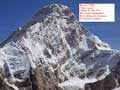
                        THIS IS MT TRISHUL. GUESS NAMES OF OTHERS!!


OPERATION JUPITER ( OP PAWAN ) 1989


INS VIRAAT:THE GARHWALI CONNECTION


BHULAS ENJOYING THEIR MEAL


BEGINNING OF THE COMBAT AFFILIATION ON HIGH SEAS


THE CAPTAIN & THE COLONEL


 TRAINING,TRAINING & TRAINING)


 SILVER JUBILEE CELEBRATIONS:BACK TO PITTSBERG